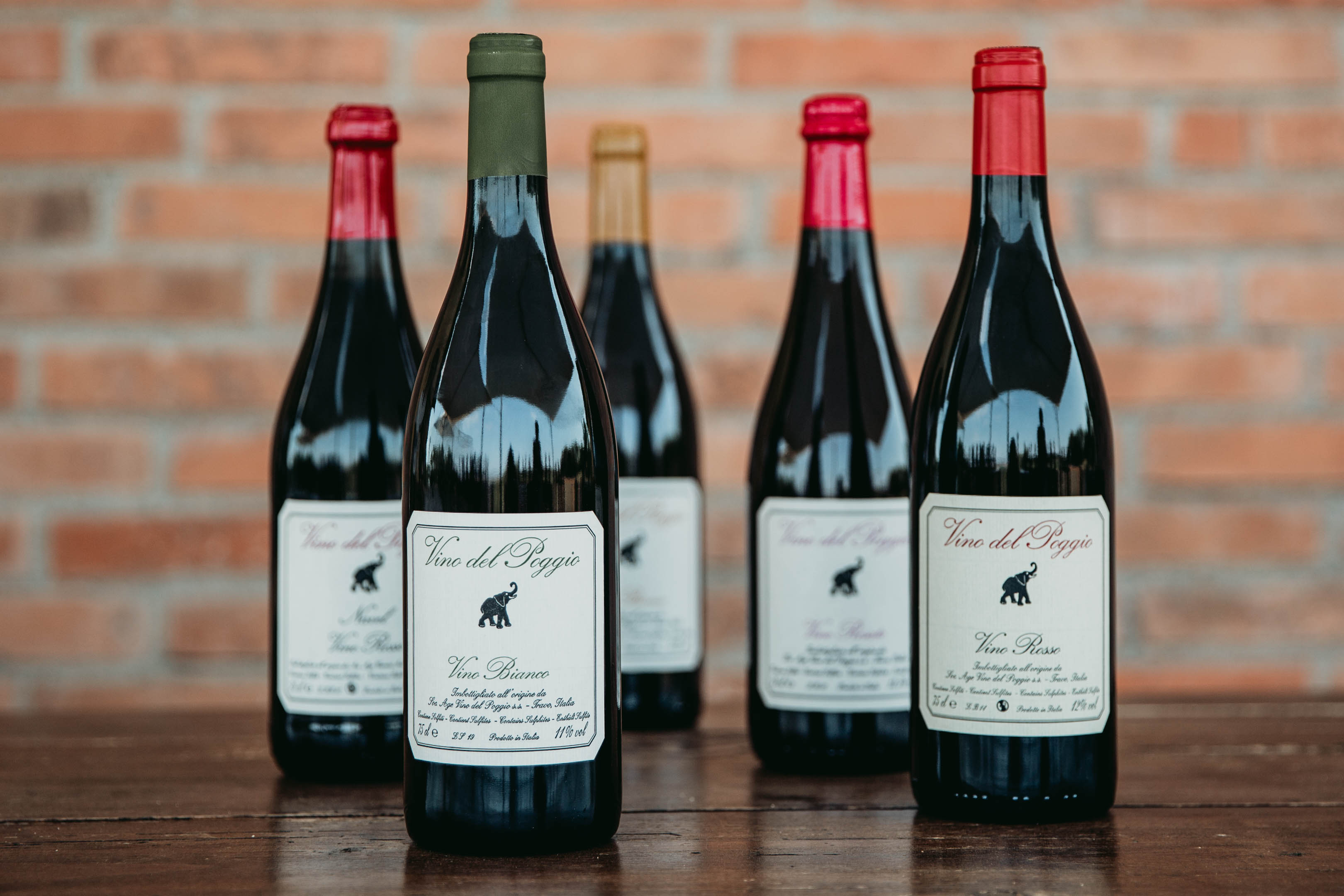
Real wines, vintage wines, wines of this land. Genuine, natural, unafraid. Wines born from a deep respect for the territory and its natural processes — from the patience to follow time rather than rush it, and from the rediscovery of practices and knowledge rooted in an ancient, direct understanding of winemaking.
The vines are trained in Guyot and treated only with sulphur and copper. In the cellar, intervention is kept to a minimum: no added sulphites, no filtration.
Each vintage is different, and so is the grape and its ripening. Spontaneous fermentations, long macerations and extended ageing are what make the wines of Il Poggio alive and singular.
Each year, if the vintage allows, the estate produces:
Barbera, single variety. Two months on the skins, then racked and aged in wood. The clay-limestone soil and the warmth of the Piacenza hills soften the grape's naturally sharp edge.
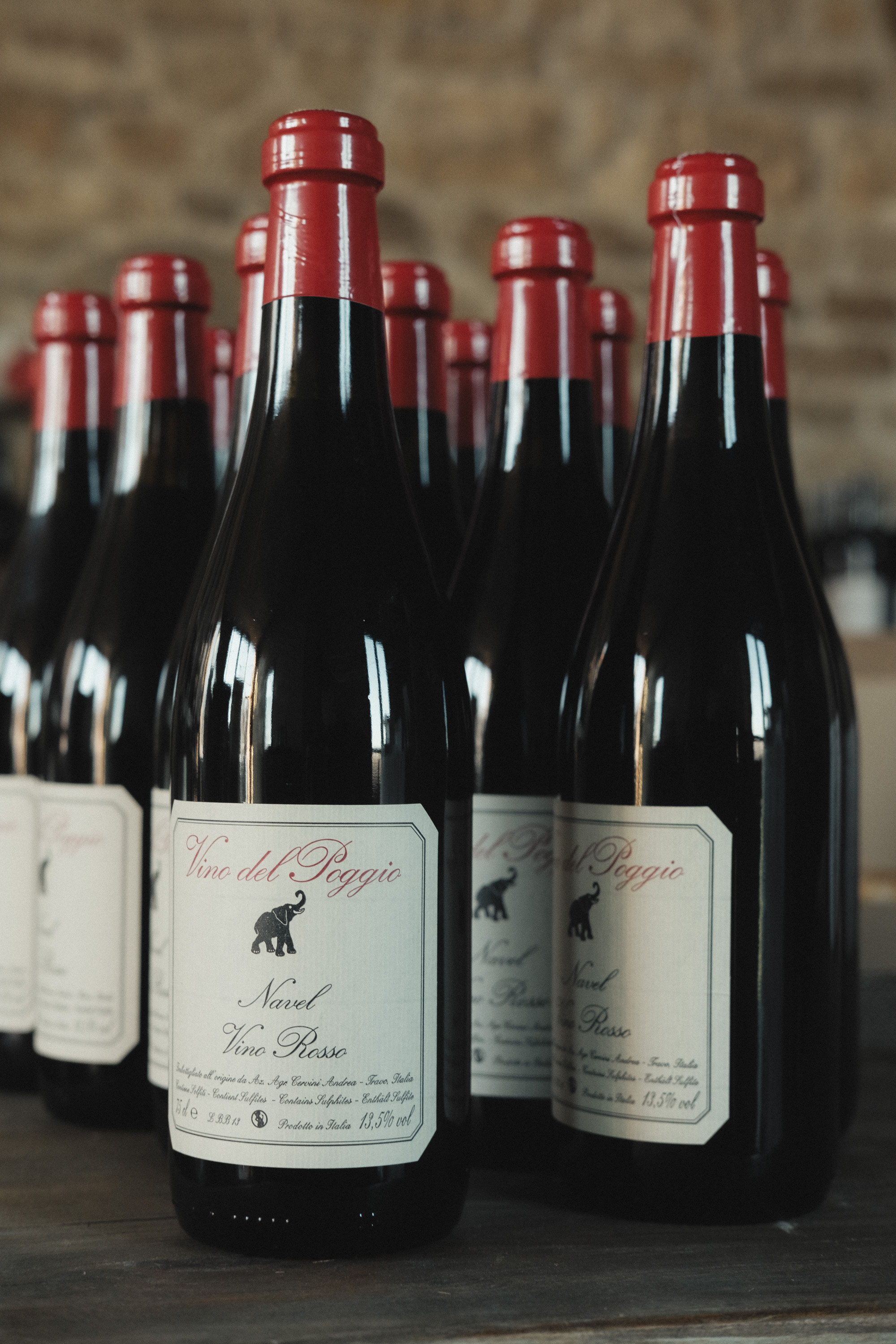
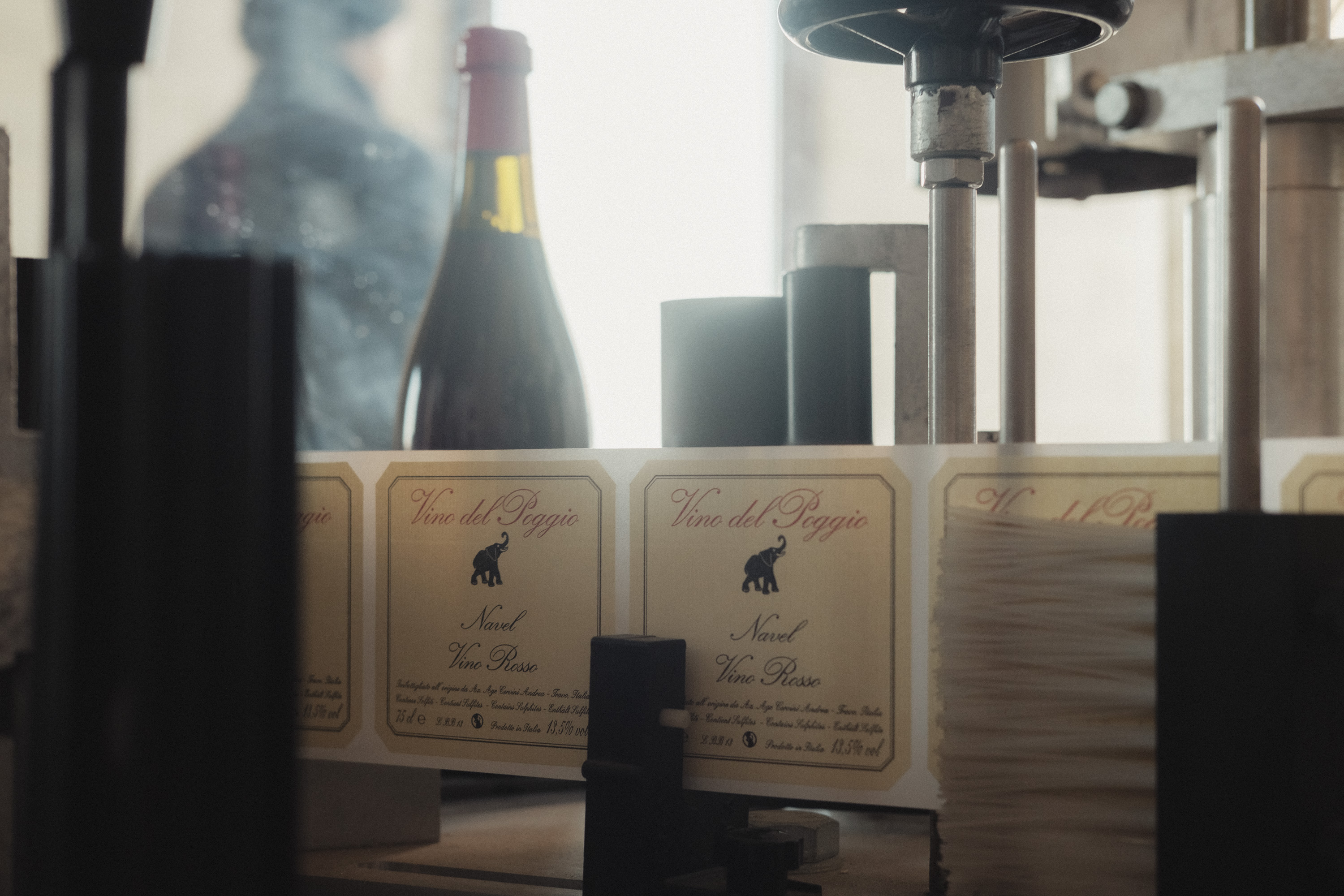
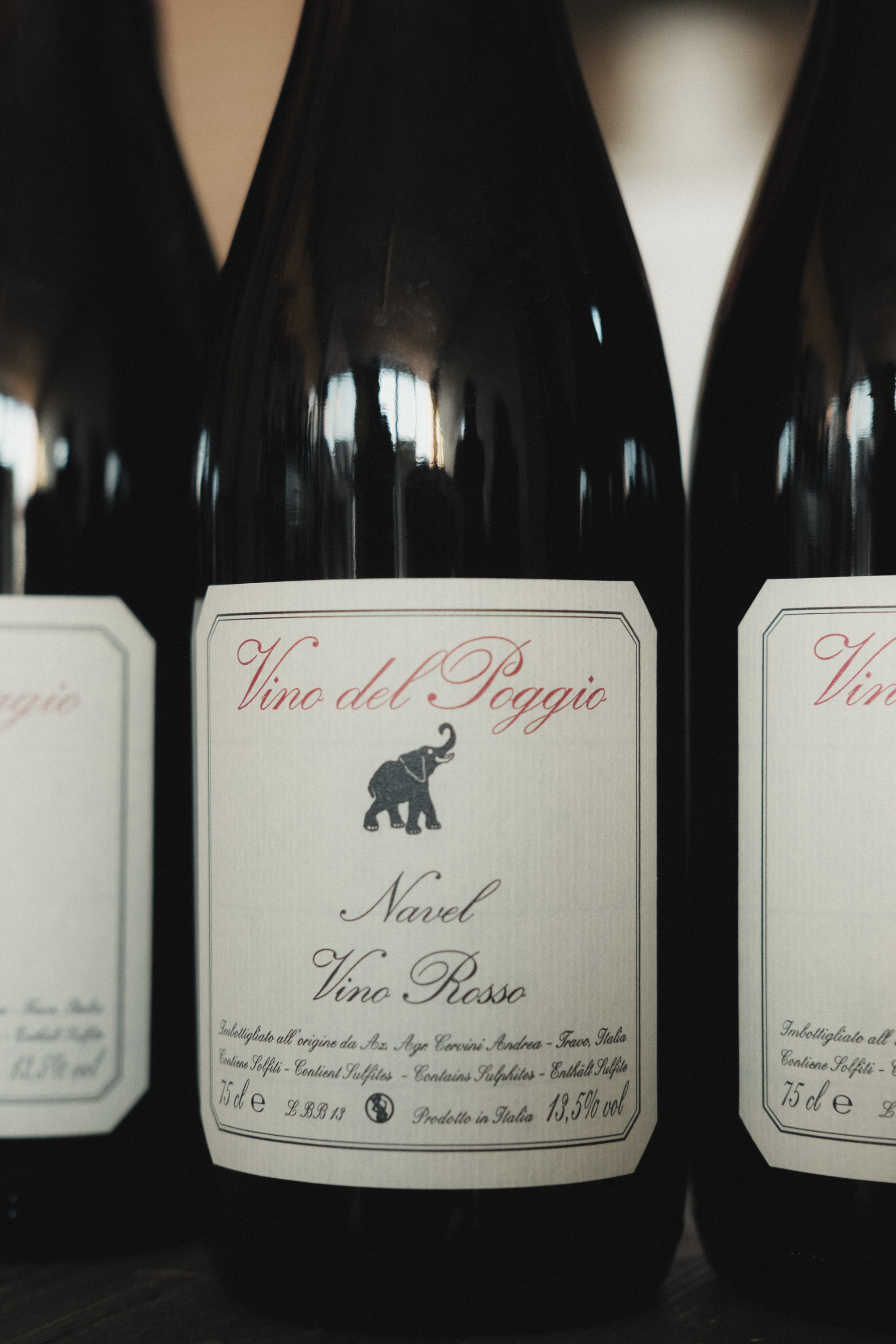
A classic Piacenza blend: 50% barbera and 50% croatina, where acidity and softness come together to produce a rich, deep wine. The two varieties are vinified separately with different maceration times — around two months in steel — then brought together for a long ageing in wood. Navel, like the channel that divides the estate's oldest vineyards.
Malvasia di Candia aromatica, single variety. A grape that has travelled the length of the Mediterranean, finding in the Piacenza hills one of its most compelling expressions — thanks to long macerations that draw out intense aromas and vigorous tannin extraction. Left on the skins for between two and six months, then aged in steel.
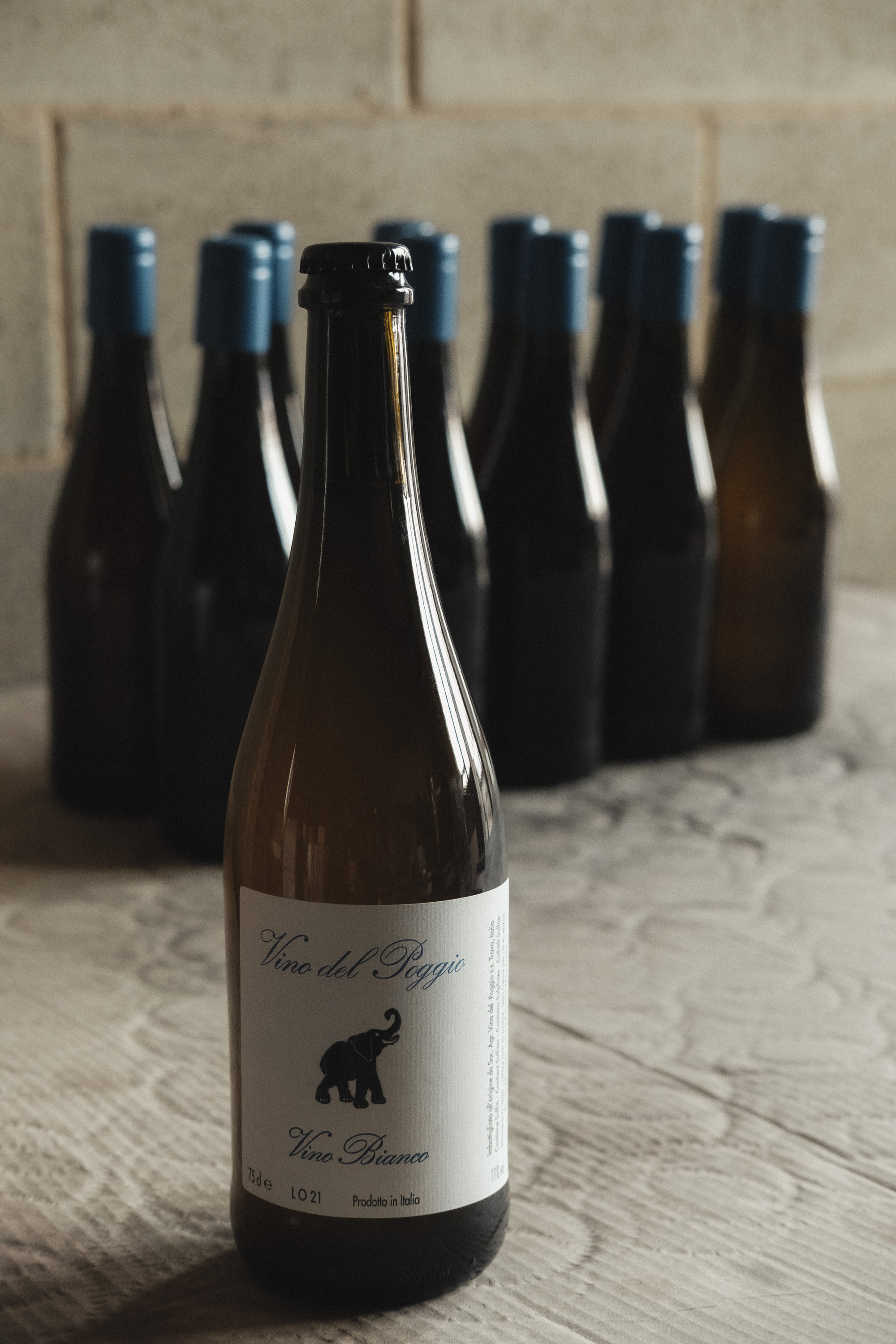
100% Ortrugo — or altrüg in dialect, the other grape. This native variety has historically been used as a blending grape. Here, instead, the choice to vinify it alone: a few weeks of maceration, ageing in steel, and spontaneous refermentation in the bottle.
A Piacenza interpretation of Sauvignon. The fermenting must remains on the skins for around forty days before being racked and aged in steel. A wild vinification for wild grapes — to bring out freshness, aromatics and salinity.
To honour the grape's pronounced acidity, the first Barbera harvested each year goes into the Rosato, vinified white with direct pressing. It is bottled with the arrival of spring, with a natural residual sugar. As the cellar warms, the yeasts trigger a refermentation in the bottle, giving the wine its characteristic effervescence.